
Antidiabetic Drug Market Overview
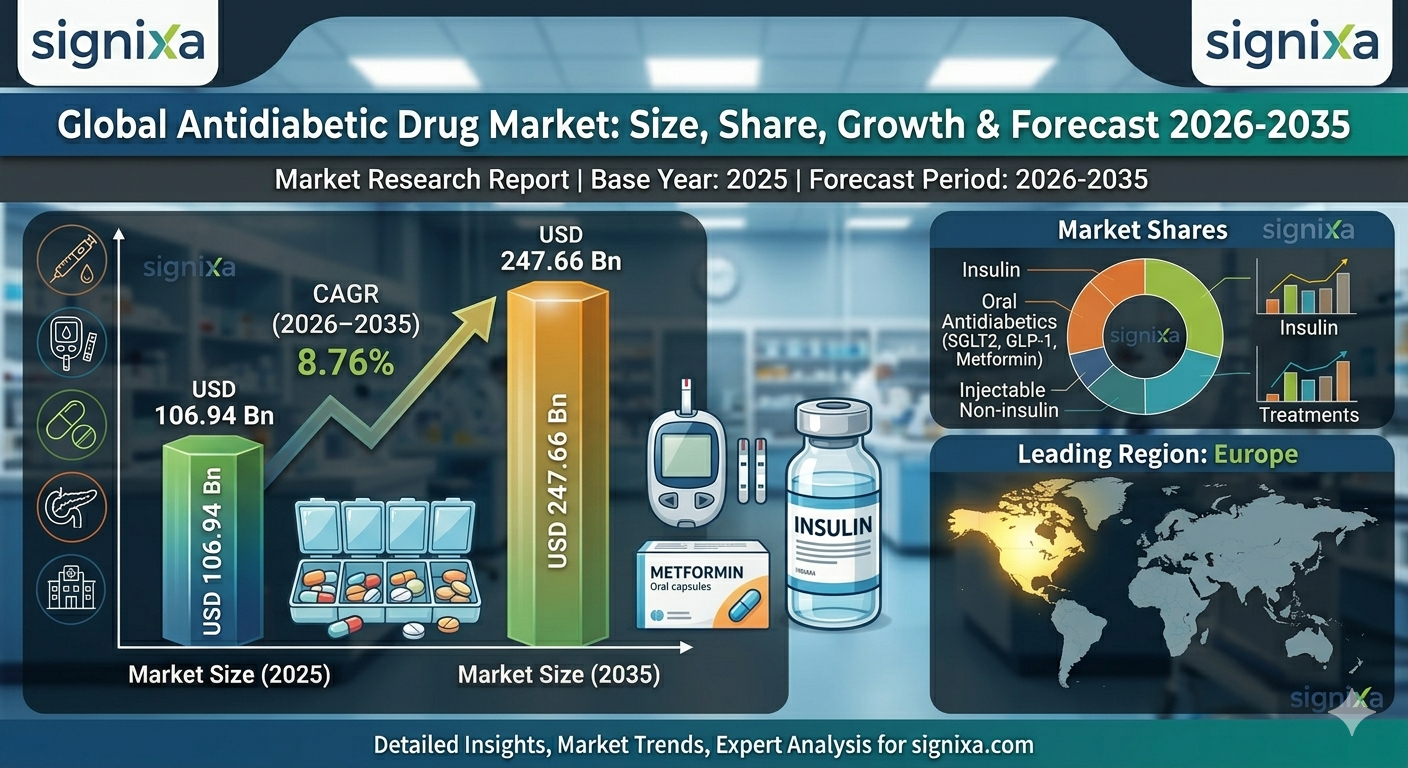
The global Antidiabetic Drug Market was valued at USD 106.94 billion in 2025 and is projected to reach USD 247.66billion by 2035, growing at a CAGR of 8.76% from 2025 to 2035. This growth is driven by the rising global prevalence of diabetes, increasing awareness of disease management, and advancements in drug delivery technologies. Demand for novel therapies that offer improved efficacy with fewer side effects continues to push research and development investments in the antidiabetic space.
The antidiabetic drug market is evolving rapidly, driven by increasing global diabetes prevalence, rising obesity rates, and innovations in drug formulations. A shift toward patient-friendly and combination therapies is evident, with glucagon-like peptide-1 (GLP-1) receptor agonists and sodium-glucose cotransporter-2 (SGLT2) inhibitors gaining significant traction due to their dual benefits in glycaemic control and cardiovascular health. Pharmaceutical companies are focusing on next-generation drugs like tirzepatide, which shows promising results for both diabetes and weight management. Oral versions of GLP-1 and non-invasive delivery methods are also under development to improve patient compliance and quality of life.
Moreover, emerging markets are witnessing increased access to novel treatments, aided by biosimilar insulin launches and strategic pricing models. Governments and health organizations are supporting early diagnosis and therapy adherence, expanding the treatment base. Digital health platforms are further transforming diabetes care by enabling personalized medication plans and real-time glucose monitoring. Strategic collaborations, patent expirations, and a strong research pipeline are fostering innovation and affordability. As the focus shifts toward holistic patient outcomes, the antidiabetic drug market is expected to become more diversified, accessible, and effective in addressing the complexities of diabetes management worldwide.
Key Findings
- The market will grow from USD 106.94 billion in 2025 to USD 247.66billion by 2035.
- CAGR for the global Antidiabetic Drug Market during 2026-2035 is projected at 8.76%.
- Type 2 diabetes segment dominates due to high global incidence.
- Oral administration route holds a major market share.
- North America and Asia-Pacific are key regional markets.
Antidiabetic Drug Market Dynamics
Rising Global Diabetes Prevalence & Growing Patient Population
The growing prevalence of diabetes worldwide, specifically Type 2 diabetes, is one of the most important factors impacting the antidiabetic drug market as new cases rise due to sedentary lifestyles, increasing rates of obesity, and an aging population. In 2023, the International Diabetes Federation reported over 530 million adults living with diabetes, which is projected to increase to over 640 million adults living with diabetes by 2035. This continued rise in patient population creates a perpetual demand for effective medications to control glycaemic levels.
Emergence of Novel Drug Classes & Combination Therapies
The emergence of GLP-1 receptor agonists and SGLT2 inhibitors, among the new classes of drugs, is fostering impressive market growth. These medications boast better cardiovascular outcomes and weight loss, making them drug of choices for providers. Likewise, the introduction of fixed-dose combination therapies and longer-acting insulins is simplifying treatment regimens and improving patient adherence.
Expanding Healthcare Access & Government Support in Emerging Markets
Escalating healthcare spending, improved insurance availability, and enhanced diagnostic capacity — particularly in emerging markets — underpin penetration in the market. Along with newly inaugurated national programs, government agencies are initiating private partnerships in expanding access to insulin and antidiabetic therapies in underserved markets. As the market increasingly develops, a more stable distribution infrastructure and increased willingness to adopt treatment have improved.
Digital Health Integration & AI-Driven Diabetes Care Ecosystems
The integration of digital health is also transforming the landscape of antidiabetic medications. Remote patient monitoring, AI-supported insulin delivery systems, and mobile applications for glucose monitoring are driving improvements in diabetes management. Pharmaceutical companies are increasingly collaborating with technology companies to develop integrated diabetes care ecosystems to enhance personalization and therapeutic success.
Antidiabetic Drug Market Segmentation Analysis
By Drug Class Segment Analysis
The market is segmented by drug class, with each category exhibiting distinct therapeutic profiles, growth drivers, and patient population characteristics:
Insulin
From a Drug Class Outlook perspective, Insulin is still an important component in managing diabetes, especially patients with Type 1 Diabetes and patients with advanced Type 2. In 2025, Insulin maintained significant revenue share, approximately 45%. The rapid-acting and long-acting analogs have appeal as they have improved pharmacokinetics and have a lower risk of hypoglycemia compared to earlier insulins. Biosimilar insulin launches and strategic pricing are also expanding access in emerging markets, further sustaining this segment's dominant position across the forecast period.
GLP-1 Receptor Agonists
GLP-1 receptor agonists are seeing double-digit growth mostly related to their weight loss benefits and cardiovascular safety profile. These agents have gained strong clinical adoption and are increasingly being recommended by healthcare providers as preferred treatment options for Type 2 diabetes patients with comorbid cardiovascular risk. Next-generation dual and triple receptor agonists, including tirzepatide, are further expanding therapeutic possibilities and driving competitive differentiation within this rapidly evolving drug class.
SGLT2 Inhibitors
SGLT2 inhibitors are increasing in use, particularly in patients with additional comorbidity, including heart failure and chronic kidney disease. Their proven renal and cardiovascular protective benefits have led to their inclusion in updated treatment guidelines across major healthcare systems globally. Growing clinical evidence supporting SGLT2 inhibitor use beyond glucose control is driving expanded prescribing across specialist and primary care settings, particularly in North America, Europe, and increasingly in Asia-Pacific markets.
DPP-4 Inhibitors
DPP-4 inhibitors are also increasing in use, particularly valued for their well-established safety profile, ease of oral administration, and low risk of hypoglycemia. They remain a widely prescribed second-line oral therapy in Type 2 diabetes management, often used in combination with metformin or other agents. While growth has moderated compared to newer drug classes, DPP-4 inhibitors continue to hold a meaningful share in regions where cost-effectiveness and tolerability are key prescribing criteria, including several emerging markets across Asia-Pacific and Latin America.
Others (Metformin, Sulfonylureas, Thiazolidinediones)
The Others segment encompasses established drug classes including metformin (a biguanide), sulfonylureas, thiazolidinediones, and alpha-glucosidase inhibitors. Metformin remains the universally recommended first-line therapy for Type 2 diabetes due to its proven efficacy, safety profile, and cost-effectiveness. While newer drug classes are gaining share at the premium end, these foundational therapies continue to represent a substantial portion of global prescriptions, particularly in price-sensitive markets where affordability and long-standing clinical familiarity drive treatment selection.
By Diabetic Type Segment Analysis
Type 2 Diabetes
In terms of diabetes types, Type 2 diabetes represents the largest share of the total demand in 2025, with more than 85%. The growth of Type 2 diabetes is driving diabetes demand in conjunction with unhealthy eating habits, less physical activity, and aging population across the globe. Type 2 diabetes is a chronic metabolic disorder characterized by insulin resistance and impaired insulin secretion, leading to elevated blood glucose levels. Management involves lifestyle modifications such as weight management, increased physical activity, and dietary changes, along with pharmacological interventions. Oral antidiabetic drugs such as metformin are usually the first line of treatment, and insulin may be required in advanced cases. As healthcare systems shift toward personalized medicine and integrated care models, managing type 2 diabetes is evolving with innovations in digital monitoring tools, combination drug therapies, and patient-centric approaches aimed at improving long-term outcomes and quality of life.
Type 1 Diabetes
Though less prevalent, Type 1 diabetes accounts for demand for new advanced insulin therapies and new continuous glucose monitoring technologies. For the Type 1 population, the increasing availability of ultra-rapid insulins and smart insulin pens are all supporting improved glycaemic control and quality of life. The growing adoption of closed-loop insulin delivery systems (artificial pancreas technology) and the development of novel immunotherapy approaches targeting the autoimmune mechanisms of Type 1 diabetes are driving sustained R&D investment. This segment continues to attract significant innovation focus from leading pharmaceutical and medical device companies globally.
By Route of Administration Segment Analysis
Oral
Oral antidiabetic medications comprised more than 60% of the market share in 2025 because of their ease of administration, a considerable amount of patient adherence, and wide availability. These include commonly used agents such as metformin, and DPP-4 and SGLT2 inhibitors. Oral antidiabetic medications work through various mechanisms, including enhancing insulin sensitivity, reducing hepatic glucose production, delaying carbohydrate absorption, and stimulating insulin secretion. The global rise in obesity and sedentary lifestyles has fuelled a surge in type 2 diabetes cases, consequently driving demand for oral therapies. With ongoing research into novel pathways and improved drug delivery systems, the oral antidiabetic segment is expected to remain dynamic and integral to long-term diabetes care.
Subcutaneous
The subcutaneous administration route is expected to increase at a modest pace due to advancements in injection devices and mostly applies to insulin and GLP-1 receptor agonists. The development of auto-injector pens, wearable patch pumps, and once-weekly formulations is significantly improving patient convenience and compliance within this route. The rising demand for GLP-1 receptor agonists, which are predominantly administered subcutaneously, is a key driver of growth in this segment. Ongoing innovation in needle technology and prefilled delivery systems is further reducing the discomfort associated with injectable therapies, broadening patient acceptance.
Intravenous
Intravenous routes apply to critical care hospitals and clinics, therefore occupying a smaller share of the market. This route is primarily used in acute care settings for managing hyperglycaemic emergencies, diabetic ketoacidosis, and perioperative glucose control in hospitalized patients. The specialized nature of intravenous antidiabetic drug administration means its use is predominantly institution-based, with demand driven by hospital admission volumes and the growing prevalence of diabetes-related complications requiring acute intervention across global healthcare systems.
By Distribution Channel Segment Analysis
Retail Pharmacies
In 2025, retail pharmacies were the market leaders with more than 45% share because they provide ease of access and patients prefer to get their chronic medications from a local pharmacy. Retail pharmacies ensure a steady supply of both prescription and over-the-counter antidiabetic medications, including insulin, oral hypoglycemics, and combination therapies. With the rising global diabetes burden, retail pharmacies have significantly expanded their reach, offering patient counselling, blood glucose testing services, and reminders for medication refills. In addition, retail pharmacies are increasingly integrating digital technologies such as e-prescriptions, home delivery apps, and point-of-sale diagnostics, enhancing treatment adherence and reducing the risk of medication lapses.
Hospital Pharmacies
Hospital pharmacies are more common as well, particularly in urban areas where patients are seen for regular check-ups and patient monitoring. This channel serves a critical role in dispensing specialist-prescribed antidiabetic therapies, injectable medications, and newly approved drug classes that require clinical oversight. Hospital pharmacies are integral to the management of newly diagnosed patients, those transitioning between treatment regimens, and individuals requiring complex combination therapies. Their close alignment with diabetes specialist teams and endocrinology departments ensures adherence to updated clinical guidelines and optimal therapeutic outcomes.
Online Pharmacies
Online pharmacies are likely to be the fastest-growing channel with a projected CAGR greater than 10% due to increase in e-commerce development, telemedicine, and more consumers requesting home delivery. This channel gained a rapid boost during the COVID-19 pandemic and continues to grow from the adoption of mobile shopping and logistics improvements. Online pharmacies offer convenience, competitive pricing, and access to a broader range of branded and generic antidiabetic medications. The integration of digital prescription management systems and teleconsultation services is further enhancing their role in long-term chronic disease management for diabetes patients globally.
Report Attributes & Market Scope
| Report Attribute | Details |
|---|---|
| Market Size Value in 2025 | USD 106.94 Billion |
| Market Size Value in 2035 | USD 247.66Billion |
| CAGR (2026-2035) | 8.76% |
| Base Year Used for Estimation | 2025 |
| Historic Data | 2020 - 2025 |
| Forecast Period | 2026 - 2035 |
| Segments Covered -By Drug Class |
|
| Segments Covered -By Diabetic Type |
|
| Segments Covered -By Route of Administration |
|
| Segments Covered -By Distribution Channel |
|
| Regions Covered | North America, Europe, Asia Pacific, Latin America, Middle East and Africa |
| Major Countries Covered | U.S., Canada, Mexico, Germany, UK, France, Italy, Spain, Russia, China, Japan, South Korea, India, Southeast Asia Countries, Brazil, Argentina, GCC Countries, Turkey, Iran, Israel, South Africa, Egypt, Nigeria, etc. |
| Key Companies Profiled | Novo Nordisk, Eli Lilly, Sanofi, Merck, AstraZeneca, and Boehringer Ingelheim, among others. |
Antidiabetic Drug Market Regional Analysis
North America is the frontrunner in the antidiabetic medication market owing to the significant prevalence of diabetes, high reimbursement, and established health care systems. The largest share continues to be attributed to the USA, where leading pharmaceutical companies operate and drugs are constantly created. Asia-Pacific is the most rapidly growing region, as a result of urbanization, more access to health care, and increased understanding of these diseases in countries such as China and India. Europe comprises a mature market with high treatment adoption rates. Latin America and Middle East & Africa are emerging markets that reflect gradual changes in the diagnosis and treatment of these diseases.
North America (Dominant Region)
North America is the frontrunner in the antidiabetic medication market owing to the significant prevalence of diabetes, high reimbursement, and established health care systems. The largest share continues to be attributed to the USA, where leading pharmaceutical companies operate and drugs are constantly created. The region benefits from early adoption of novel drug classes including GLP-1 receptor agonists and SGLT2 inhibitors, supported by robust clinical trial infrastructure and regulatory frameworks that enable faster drug approvals. Rising obesity rates, increasing Type 2 diabetes diagnoses, and a strong focus on cardiovascular risk reduction are further driving demand for premium antidiabetic therapies. Strategic collaborations between pharmaceutical companies and digital health technology firms are also contributing to the development of integrated diabetes management platforms across the region.
Europe
The antidiabetic drug market in Europe is experiencing steady growth due to the rising incidence of type 2 diabetes, sedentary lifestyles, and aging populations. European countries have well-established healthcare infrastructure, which supports widespread diabetes diagnosis and access to advanced treatment options. The region has seen an increased adoption of GLP-1 receptor agonists and SGLT2 inhibitors, particularly for their cardiovascular and renal benefits alongside glycaemic control. Many European health authorities now include these drugs in their treatment guidelines, strengthening their market presence. Regulatory support from agencies like the European Medicines Agency (EMA) ensures quicker approval processes for innovative therapies and biosimilars, boosting market competitiveness. There is also a strong focus on research and clinical trials across Germany, the UK, and France, fostering innovation in long-acting insulins, oral GLP-1 drugs, and dual-acting therapies. With its supportive ecosystem, rising health consciousness, and demand for effective yet cost-efficient solutions, Europe remains a vital hub for antidiabetic drug development and commercialization.
Asia-Pacific
The Asia Pacific antidiabetic drug market is witnessing robust expansion due to rising diabetes prevalence, urbanization, and evolving healthcare infrastructure. Countries like India, China, and Japan are key contributors, with large diabetic populations and increasing adoption of advanced therapies such as GLP-1 receptor agonists and SGLT-2 inhibitors. Governments across the region are actively promoting awareness programs and subsidizing essential antidiabetic drugs, improving access to treatments. Additionally, domestic pharmaceutical players are investing in biosimilar insulin production to enhance affordability. The growing middle-class population, increased health screening, and lifestyle changes are further accelerating market growth. Innovations like AI-driven glucose monitoring systems and personalized medication regimens are also gaining traction. However, disparities in healthcare infrastructure and pricing regulations across emerging economies pose some limitations. Despite these challenges, Asia Pacific remains the fastest-growing regional market, driven by high demand, policy support, and increased R&D activity from both local and global players targeting unmet medical needs.
Middle East & Africa
The antidiabetic drug market in the Middle East & Africa (MEA) is witnessing notable expansion due to the rising incidence of diabetes, urbanization, and growing healthcare investment. Countries like Saudi Arabia, the UAE, South Africa, and Egypt are reporting sharp increases in diabetic populations, largely driven by changing lifestyles, poor dietary habits, and limited physical activity. While traditional oral antidiabetic drugs remain widely used, newer therapies like DPP-4 inhibitors, SGLT2 inhibitors, GLP-1 receptor agonists, and biosimilar insulins are gaining traction, particularly in urban healthcare settings. Government initiatives aimed at improving early diagnosis and subsidizing medications are encouraging the adoption of effective diabetes management strategies. Saudi Arabia's Vision 2030 and the UAE's robust digital health frameworks are enabling faster regulatory approvals and improved treatment access. Local manufacturing of generic insulins and GLP-1 therapies is being prioritized in several MEA nations to increase affordability, and the region is steadily transforming into a dynamic antidiabetic market characterized by a balance of affordability, innovation, and growing demand for chronic disease management solutions.
Latin America
Latin America is an emerging market for antidiabetic drugs, reflecting gradual changes in the diagnosis and treatment of diabetes driven by rising urbanization, increasing obesity rates, and improving healthcare access. Brazil and Mexico are the primary contributors, each with growing diabetic populations and expanding national health programs supporting access to essential diabetes medications. The region is witnessing gradual adoption of newer drug classes including GLP-1 receptor agonists and SGLT2 inhibitors in urban healthcare centers, while affordability remains a key consideration for the broader population. Government initiatives focused on non-communicable disease management and the growing role of generic and biosimilar insulin manufacturers are expected to improve treatment accessibility and support sustained market expansion through 2035.
Recent Developments in the Antidiabetic Drug Market
-
2023
Novo Nordisk launched a once-weekly insulin for Type 2 diabetes, enhancing treatment adherence.
-
2022
Eli Lilly received FDA approval for Mounjaro (tirzepatide), a novel dual GIP and GLP-1 receptor agonist.
Antidiabetic Drug Market: Competitive Landscape
The market for antidiabetic medications is highly competitive. Key players are pursuing expansion through R&D, onset of collaboration agreements, and portfolio expansion in order to maintain their competitive edge. Leading players in the antidiabetic drugs market include Novo Nordisk, Eli Lilly and Company, Merck & Co., Sanofi, AstraZeneca, Boehringer Ingelheim, Johnson & Johnson, Takeda Pharmaceutical, Bayer AG, and Novartis. Major players are preparing product launches, moving product candidates through the necessary regulatory bodies, and developing combination therapies. Strategic collaboration with technology companies and investments in digital diabetes management platforms are further cultivating their trust in the market.
The competitive landscape of the antidiabetic drug market is evolving rapidly as pharmaceutical companies focus on innovation, affordability, and market expansion. A major area of competition is in the development of novel drug classes and improved drug delivery systems, such as once-weekly injectable and oral semaglutide formulations that enhance patient compliance. The market is also witnessing a shift from traditional therapies toward personalized medicine, combining glucose-lowering effects with weight management and cardiovascular benefits. This has created space for differentiated therapies to stand out in the increasingly crowded market.
Research and development remain a core strategy, with companies investing in new mechanisms of action, such as dual or triple receptor agonists that offer multifaceted benefits. Additionally, many are advancing fixed-dose combinations that combine multiple drugs in a single formulation to reduce pill burden. Digital health integration is another key area of competition, with platforms offering glucose monitoring, remote care, and AI-driven treatment recommendations, creating a more holistic approach to diabetes care. Global players are also targeting emerging markets with biosimilars and generics to ensure cost-effective treatments in regions with high disease prevalence. Strategic collaborations with healthcare providers and governments, as well as licensing and co-marketing agreements, are helping companies to penetrate new geographies and extend their market footprint.
Key Companies Profiled
Global Antidiabetic Drug Market Segmentation Summary
By Drug Class
By Diabetic Type
By Route of Administration
By Distribution Channel
By Region
Frequently Asked Questions (FAQs) About the Antidiabetic Drug Market
What are antidiabetic drugs?
Antidiabetic drugs are medications used to control blood glucose levels in individuals with diabetes, including insulin, GLP-1 receptor agonists, DPP-4 inhibitors, SGLT2 inhibitors, and others.
What is the market size of the Antidiabetic Drug market?
The global Antidiabetic Drug market was valued at USD 106.94 Billion in 2025 and is projected to reach USD 247.66Billion by 2035.
What is the CAGR of the Antidiabetic Drug market during 2026-2035?
The market is expected to grow at a CAGR of 8.76% during the forecast period from 2026 to 2035.
Which segment dominates the Antidiabetic Drug market by drug class?
Insulin and GLP-1 receptor agonists are the leading drug classes, with insulin holding approximately 45% market share in 2025 due to its critical role in managing both Type 1 and advanced Type 2 diabetes.
Which region leads the global Antidiabetic Drug market?
North America dominates the market due to high disease prevalence and strong healthcare infrastructure, followed by Asia-Pacific as the fastest-growing region.
Who are the major players in the Antidiabetic Drug market?
Key players include Novo Nordisk, Eli Lilly, Sanofi, Merck, AstraZeneca, Boehringer Ingelheim, Johnson & Johnson, Takeda Pharmaceutical, Bayer AG, and Novartis, among others.
What are the major trends in the Antidiabetic Drug market?
Key trends include the rise of digital diabetes management tools, development of once-weekly and combination therapies, and increasing use of GLP-1 and SGLT2 drugs due to their added benefits in weight and cardiovascular risk management.